Ghanaians gave NDC the mandate, not the NPP – Dr Bannor
Dr Frank Bannor, has told the NDC administration to focus on addressing the challenges facing the country, including the perennial floods, instead of blaming the previous NPP administration for what was not done in the past.
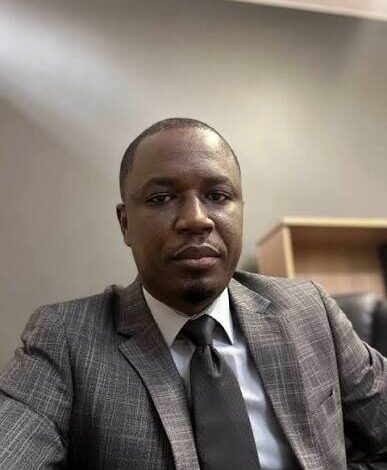
Dr Bannor says that Ghanaians handed over power to the NDC to address the problems, not to engage in a blame game.
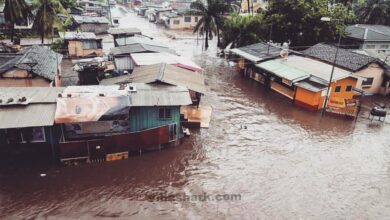
Commenting on the devastating flood that occurred on Monday, Dr Bannor said in a statement on his Facebook page that “If after 18 months in power the NDC is still telling us what the NPP should have done and didn’t do, then what is their use of being in power? Do they understand why Ghanaians gave them a massive vote? It’s been 3 days after the devastating floods, and families and businesses are still reeling from the fallout of the floods. A competent government would have moved to console the people and businesses affected. This government chose to hold a thanksgiving service with the President dancing like nobody’s business! What is more insensitive than this? Yet, the excuse being bundled around for this is that the NPP should have done ‘abcdefgh’, such crass statements!
“I dare say to the NDC that they should continue with the fanfare and the utmost disregard for the ordinary Ghanaian. It serves us right! After all, we are the ones that voted for a loquacious and incompetent government! However, the day of accountability will soon come! They shouldn’t be too comfortable! Sad to this is the defence posture of paid CSOs! They will even dive into the annals of hell to cook insane excuses for the failure of President Mahama and his NDC government. The work of think-tanks has been reduced to “goro boys” in Ghana. Their shame has no bound! The watchdogs of our democracy are in bed with the very people they are supposed to police. Sad isn’t it? But we cannot give up! This is the time for us to fill the void and hold the NDC accountable! We can’t fail the ordinary Ghanaian on this sacred mandate!”
His comments follow the recent remarks by the Member of Parliament for Sagnarigu and member of Parliament’s Finance Committee, Atta Issah, on the flood situation, vis-à-vis the government’s handling of the Greater Accra Resilient and Integrated Development (GARID) Project.
Speaking, Mr. Issah said the Mahama administration inherited severe economic challenges that compelled the Finance Ministry to impose expenditure controls across government, affecting several projects, including GARID.
He stressed that the measures were part of broader efforts to restore fiscal discipline and stabilise the economy.
“When the government assumed office, it was confronted with an extremely difficult fiscal situation. The Minister for Finance therefore had to introduce expenditure controls across several sectors, not only Works and Housing. It was not because the government wanted projects to stop, but because fiscal discipline was necessary to stabilise the economy,” he told Joy News.
According to him, the temporary slowdown in the GARID Project should not be interpreted as a lack of commitment by the government. “It is not targeted at one particular project or sector,” he added.
Mr. Issah also challenged claims that the government had neglected the World Bank-funded flood mitigation programme, arguing that official engagements with the World Bank demonstrate the administration’s commitment to completing the project.
He disclosed that after discussions with the World Bank, the government proposed the withdrawal of US$10.5 million, while an additional US$13.8 million that had previously been set aside for the project had been restored.
He further revealed that the government had submitted a comprehensive restructuring request to the World Bank and was seeking additional fiscal allocations for the project during the mid-year budget review in July.
Addressing concerns over the recent devastating floods in Accra, the Sagnarigu MP said the GARID Project cannot be judged as a failure because many of its interventions are still ongoing.
“The project is not fully complete,” he said, noting that engineering designs have already been completed and submitted to the World Bank, while a flood early warning system has also been established.
He cited recent forecasts by the Ghana Meteorological Agency warning of more heavy rainfall as evidence that flood preparedness remains critical.
Mr. Issah argued that Accra’s flooding problem extends beyond funding and is compounded by poor urban planning, encroachment on waterways and delays in enforcing planning regulations.
“When the President undertook an aerial inspection of Accra, huge structures were seen sitting on waterways. Illegal construction and human activities continue to obstruct drainage systems,” he said.
He noted that efforts to remove structures obstructing waterways often attract political criticism, making enforcement difficult.