Ahmed Ibrahim Leads Ghana’s Delegation to SOCO Conference in Côte d’Ivoire
Minister calls for stronger regional cooperation on security, climate change, and economic resilience as Gulf of Guinea nations align strategies for sustainable development and social cohesion
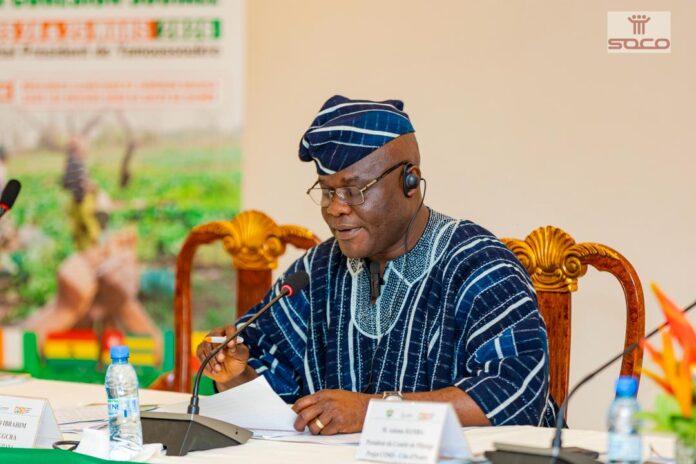
Minister for Local Government, Chieftaincy and Religious Affairs, Ahmed Ibrahim, is leading a delegation to Côte d’Ivoire for the Social Cohesion SOCO Regional Conference, where a key Coordination and Regional Committee (CRC) meeting is underway before the main event.
This pre-conference activity is laying the groundwork for enhanced collaboration among Gulf of Guinea countries, including Ghana, Benin, Côte d’Ivoire, and Togo.
During the meeting, Hon. Ahmed Ibrahim highlighted the importance of collective efforts in addressing regional issues such as insecurity, climate change, and economic challenges faced by border communities.
He stressed that development and security are closely linked, noting that communities in northern Ghana and the Sahel are increasingly impacted by climate variability, cross-border migration, and extremism.
“The challenges we face do not respect borders,” he said. “Our responses must be coordinated, inclusive, and ongoing.”
The CRC meeting, held before the main conference, is vital for aligning national priorities, reviewing progress, and translating policies into practical programs. It provides a strategic platform to coordinate efforts across countries and with development partners.
A notable contribution from Ghana was the success of the SOCO Project, reaching about 1.5 million people in 48 districts across six northern regions. It has implemented nearly 950 infrastructure projects, including schools, health facilities, water systems, and climate resilience initiatives.
Ghana’s Local Economic Development efforts have benefited over 46,000 people through more than 1,500 community groups, with about 80% comprising women and youth involved in agriculture and small businesses.
The Minister highlighted that such investments are already improving livelihoods, building trust in local governance, and reducing vulnerability to extremism.
Recent security incidents, like attacks affecting Ghanaian traders across borders, emphasize the interconnectedness of regional risks and the need for enhanced cooperation in intelligence sharing, border security, and community resilience.
Climate change discussions underscored the importance of gender-sensitive adaptation strategies to support women and youth, who are most affected by environmental and economic shocks.
As the main SOCO Conference approaches, stakeholders aim to strengthen commitments to solutions that create jobs, promote social inclusion, and ensure sustainable development.
The Minister reaffirmed Ghana’s dedication to collaborating with neighboring countries and partners to transform vulnerable border areas into centers of opportunity.
The conference’s outcomes are expected to influence future policies and investments for regional peace, stability, and prosperity across the Gulf of Guinea sub-region.