PIAC Urges Strategic Investment to Revive Ghana’s Declining Oil Sector
Committee calls for targeted funding and policy reforms as crude output and petroleum revenues continue to fall

The Public Interest and Accountability Committee (PIAC) has urged the government and the Petroleum Commission to establish a strategic framework aimed at attracting investment into existing oil fields, as well as undeveloped ones such as Springfield and Pecan.
The committee highlighted the urgent need to revive production at the Tweneboa Enyenra Ntomme (TEN) Field, where output has fallen below expectations, calling for a joint investment strategy between the state and field operators.
This recommendation comes in response to a steady decline in Ghana’s crude oil production over the past six years, dropping from 71.44 million barrels in 2019 to 37.3 million barrels in 2025 raising concerns about the long-term viability of the country’s oil sector.
Additionally, petroleum revenues fell sharply in 2025, with total receipts reaching $770.27 million, a 43.27% drop from the $1.36 billion recorded in 2024.
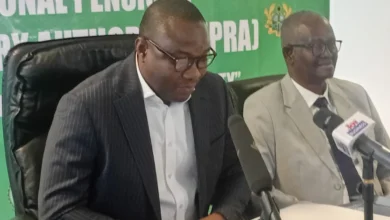
Speaking at the launch of PIAC’s 2025 Annual Report in Accra, Chairman Richard Ellimah stressed the importance of a comprehensive national plan that ensures operators commit to targeted investments to increase output. He suggested setting clear production targets, such as boosting daily output from 30,000 to 50,000 barrels within a defined period.
He also called for improvements in regulatory and fiscal policies, alongside enhanced data collection in new oil basins.
The report, published under the Petroleum Revenue Management Act, 2011 (Act 815), marks PIAC’s 29th statutory report and covers petroleum revenue management activities from January to December 2025. It reviews production levels, revenue inflows, fund allocations, and the management of key funds such as the Ghana Stabilisation Fund and the Ghana Heritage Fund.
At the event, chaired by Henry Kwasi Prempeh of the Centre for Democratic Development (CDD-Ghana), stakeholders from various institutions including the Ghana National Petroleum Corporation and Tullow Ghana Limited gathered to discuss the sector’s future.
A Technical Advisor at the Ministry of Finance, Theophilus Acheampong, noted that while overall production has declined, performance varies across fields. He pointed out that the Jubilee Field has remained relatively stable due to infill drilling, while the TEN field continues to face significant challenges.
Dr. Acheampong added that recent reforms have addressed some policy gaps, but sustained production growth remains critical for boosting national revenue.
Prof. Prempeh described PIAC as a groundbreaking model for parliamentary oversight, noting that its continued operation and reporting represent a major achievement despite earlier legal and political challenges. He encouraged stakeholders to amplify the committee’s findings to drive accountability and policy action.