
Sports
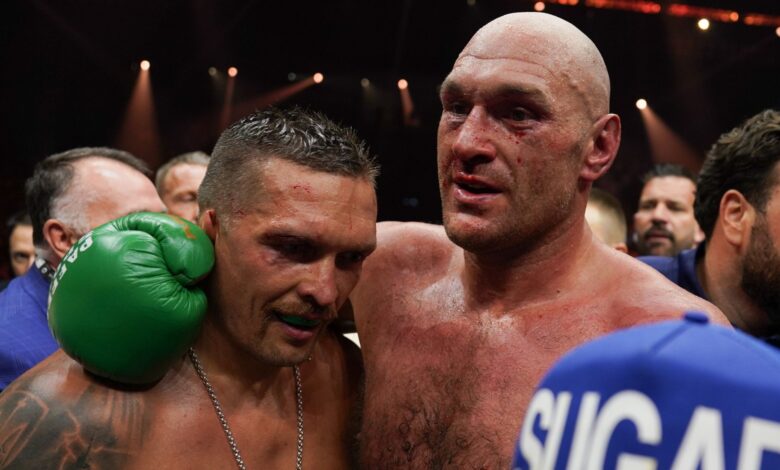
Boxing : Oleksandr Usyk v Tyson Fury rematch set for December 21
Deprecated: htmlspecialchars(): Passing null to parameter #1 ($string) of type string is deprecated in /home/u799106181/domains/luckytvonline.com/public_html/wp-includes/formatting.php on line 4732
Undisputed heavyweight champion Oleksandr Usyk and Tyson Fury are set to meet in a rematch on 21 December, according to the chairman of Saudi Arabia’s general entertainment authority.
Usyk beat Fury by split decision to become the first undisputed champion of the four-belt era on 18 May.
A rematch was said to be in the works for October but Turki Alalshikh says the date has been pushed back to December
The contest would give Briton Fury, 35, the opportunity to gain revenge after tasting defeat for the first time in his 16-year professional career against Usyk.
It is unlikely that all four belts will be on the line in the rematch with the IBF planning to strip Usyk as he will not be facing its mandatory challenger next.
Deprecated: htmlspecialchars(): Passing null to parameter #1 ($string) of type string is deprecated in /home/u799106181/domains/luckytvonline.com/public_html/wp-includes/formatting.php on line 4732



Their global health resources are unmatched.
where to buy lisinopril price
The staff always goes the extra mile for their customers.
safe and effective drugs are available.
cytotec for sale philippines
Impressed with their wide range of international medications.
A pharmacy I wholeheartedly recommend to others.
gabapentin postoperative pain
Every visit reaffirms why I choose this pharmacy.
Global reach with a touch of personal care.
lisinopril 20 mg what to buy without prescription
Their team understands the nuances of global healthcare.
rivers casino chicago
References:
https://topspots.cloud/item/583737